The Fall of House Barrister - Game Design Capstone
By Steven Papps
Concept
This is my capstone project for my Game Design Bachelor’s at CGSpectrum Institute. This project was created to be a short demo to highlight some gameplay features, introduce and hook players for a full game release in the future. It is a dark fantasy roguelite dungeon crawler emulating retro style graphics and gameplay mechanics. It was built using Unreal Engine 5.7 and draws heavy inspirations from other dark fantasy games such as darkest dungeon, Fear and Hunger and World of Horror as well as taking heavy inspiration from the JRPG genre.
The original concept for the game came from a mish mash of different games that inspired me to enter the industry, although I had grown up playing all sorts of games ranging from strategy to first person shooters, the dark fantasy jrpg or turn based genre of games was what really got me into the industry. I wanted to make a game that showcased this and paid homage to the types of games that gave me my original creative spark.
I played around with lots of different ideas regarding a more retro style dungeon crawler, and took heavy inspiration from BLOB games such as Wizardry, and in that vein the game was originally meant to be a four party member game commonly found in turn based games. Some other concepts I played around with were a custom dice pool, a gambling combat system and other non conventional modes of combat. However I ultimately ended up going back to a more traditional form of combat utilizing an action point system. I also scrapped the party member system in favor of a single character, In terms of scope, designing four different characters who all played differently yet harmoniously within the same party was a bit much for one person to do within 3 months.
Systems
Time System
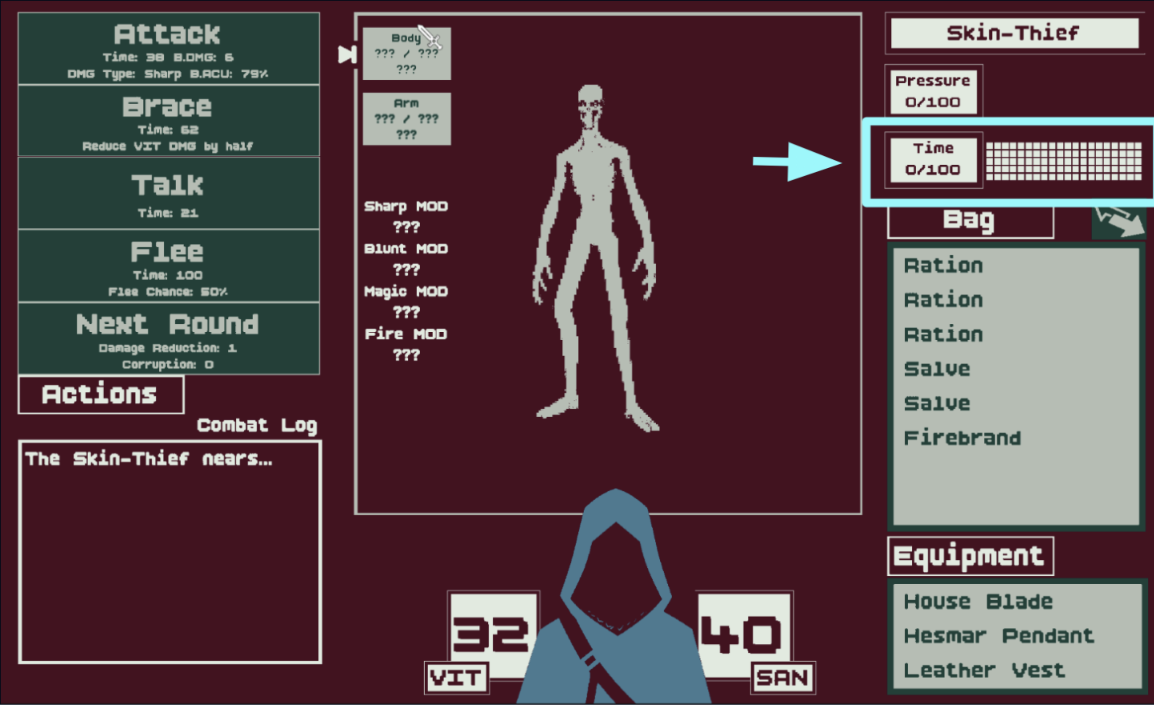
When designing the combat system, I ultimately landed on utilizing an action pool that determines how many actions a player could use during each round of combat. I took heavy inspiration from the game World of Horror With the exception of spells and items, each action a player decides to take during combat costs varying amounts of time, when the player is out of time to act they are forced to pass onto the next round where the enemy will have a chance to act. This forces the player to carefully plan out each of their actions during combat, and when compared to the standard JRPG style one action per round this multi action format fits a single character party much better allowing for more flexibility and variability in play.
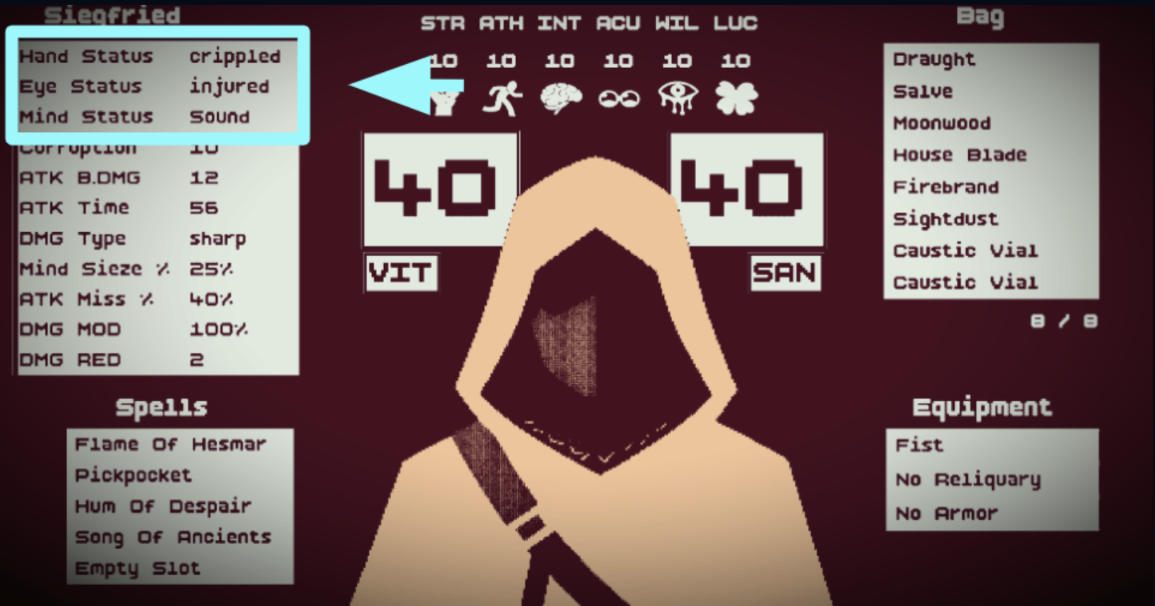
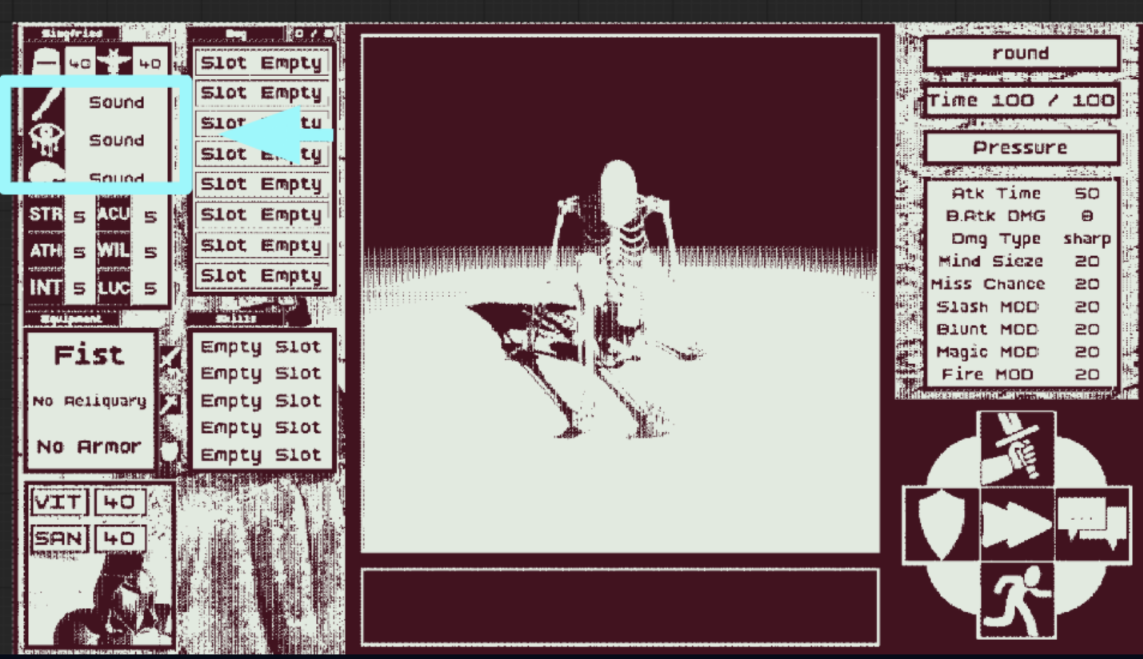
First iteration of the Character and Combat UI featuring the injury system
Removal Of Injury System
One big removal was the injury system, punishing the player for risky actions and poor play. I found the system too punishing for the player, and the extra stats was too much for the player to keep track of without having to constantly check individual track progressions. The injuries originally determined specific combat numbers such as miss chance, damage mods and acting speed. These were later tied to different equipment items, character stats and enemies instead
Pressure System
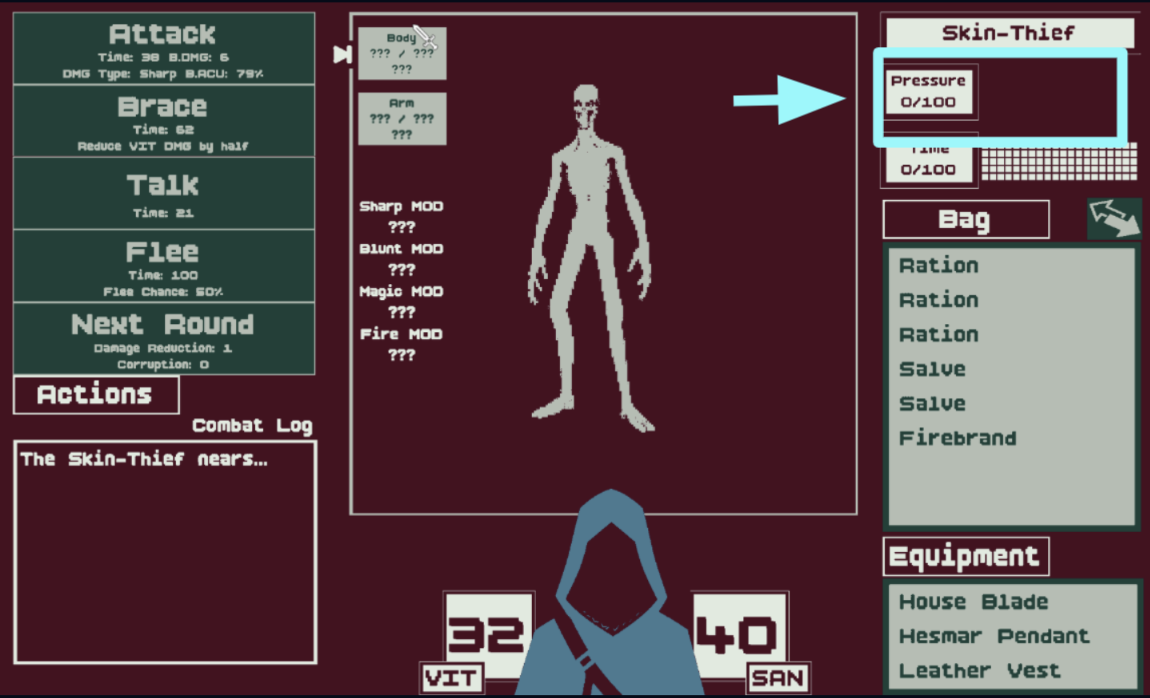
A system unique to the game is the pressure track, which builds up during combat whenever the enemy gets to act. Each action the enemy performs will build up varying amounts of pressure, which then in turn dictate how the enemy will act in their next round. When the pressure hits 100, the enemy will execute their most powerful attack often resulting in player death. Combat turns into a careful tightrope walk between dealing damage to the enemy, healing and managing the pressure track. Although still in its early stages with only about 2 months of development on the actual system, this is something I want to bring forwards into my future projects and develop on more thoroughly as It provides an interesting ‘soft countdown’ mechanic to fights.
Limb Removal System
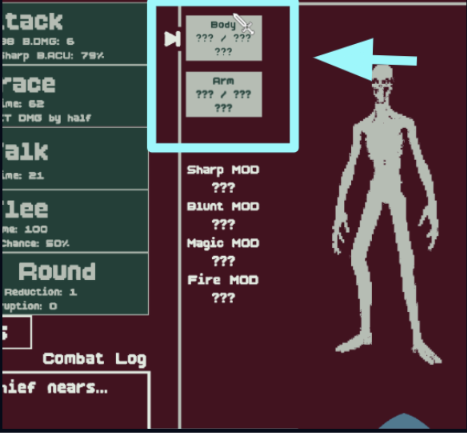
Being heavily inspired by Fear and Hunger, of course, has to have a limb system at least for the enemies. I played around with having a limb system for the player, but it turned out to be too punishing. As a roguelite the player doesn’t have access to save points like in Fear and Hunger, meaning death results in a full reset.
With a limb system, the player has to carefully select which limb to attack and deal damage to. Enemy actions are heavily dictated by the limbs they are still in possession of and getting rid of the enemy’s weapons early could result in a much more favorable fight for the player. With certain enemies, getting rid of a limb may result in their ultimate pressure attack not working outright which gets rid of the certain death attack the enemy is capable of.
Items, Equipment and Spells
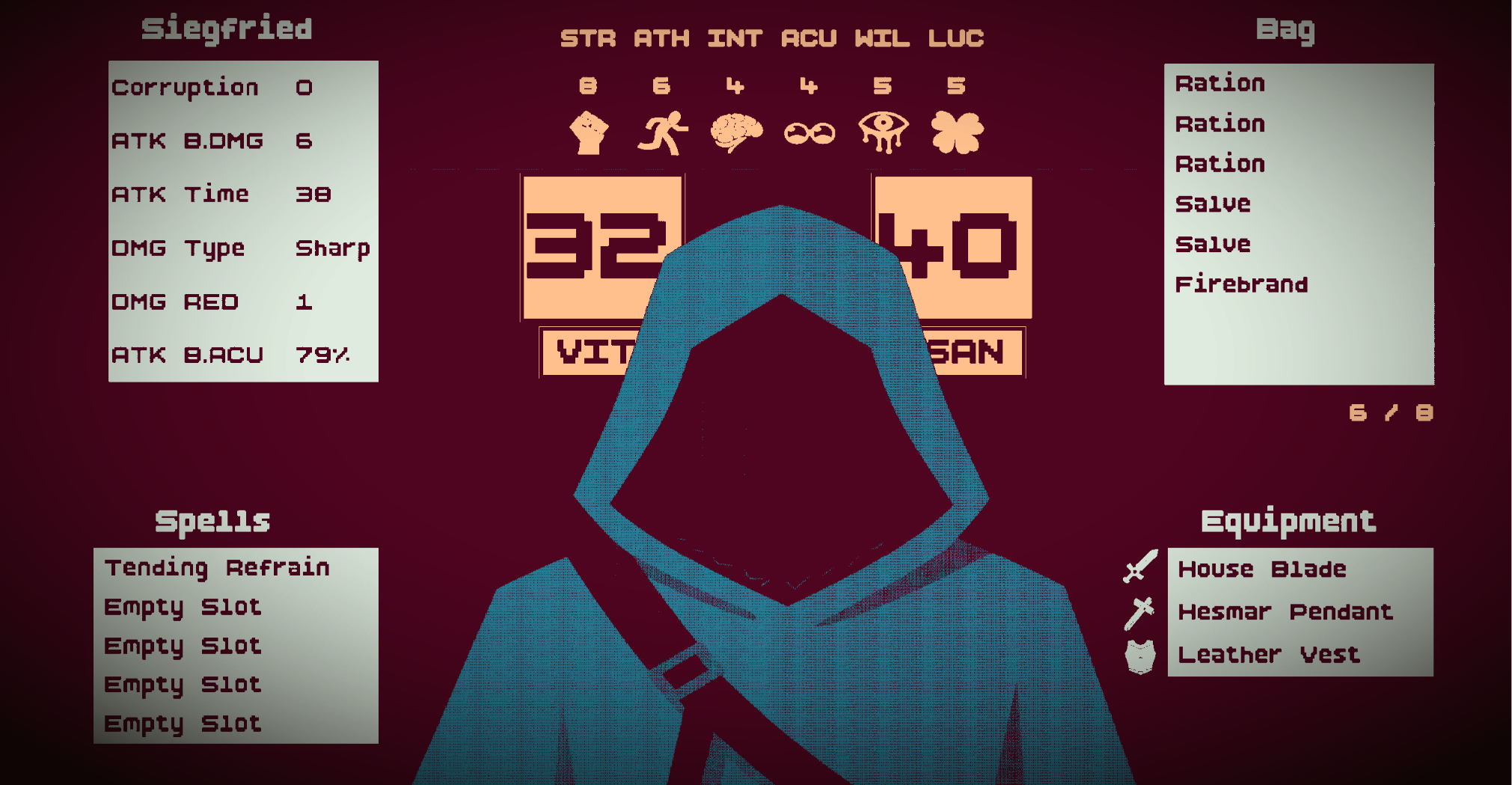
The player has three equipment slots they can fill: Weapon, Armor and Reliquary. The player has an inventory capable of holding 8 items, forcing the player to carefully choose what items they want to hold onto during their run since there’s no item stacking and each item occupies the same amount of space in their inventory. The player is capable of learning up to 5 spells, after which they need to forget spells to make space for new spells.
Items and spells are interesting because unlike standard combat actions they don’t cost time to use, meaning a player can spam items and spells to get through a particularly difficult combat encounter. This is the part of the game where resource management becomes a meaningful choice, and tries to challenge a player’s natural instinct to save their items and resources for a later encounter as many fights are too difficult to get through without expending resources. Spells are often able to be used multiple times with the exception of the single use spells.
The item and spell design were particularly fun to do and had to conform to specific design principles to ensure harmonious synergy and encourage different player builds. Spells particularly, as each spell had to have a cost for usage. The spells, unlike the generic magic system in most games, are designed to be a last resort and should be used sparingly or in the right moments as sometimes the cost of spells outweighs the benefit.
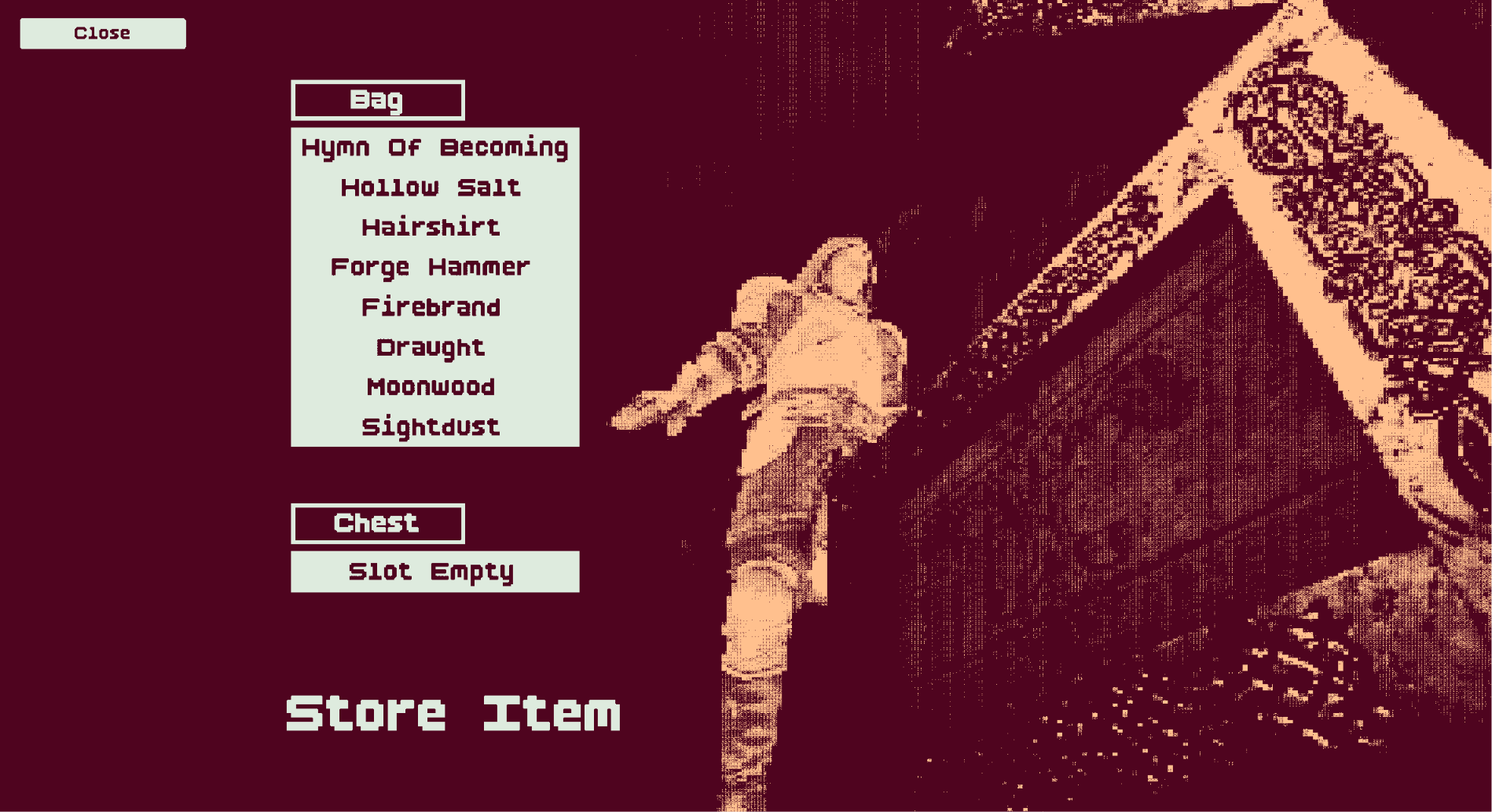
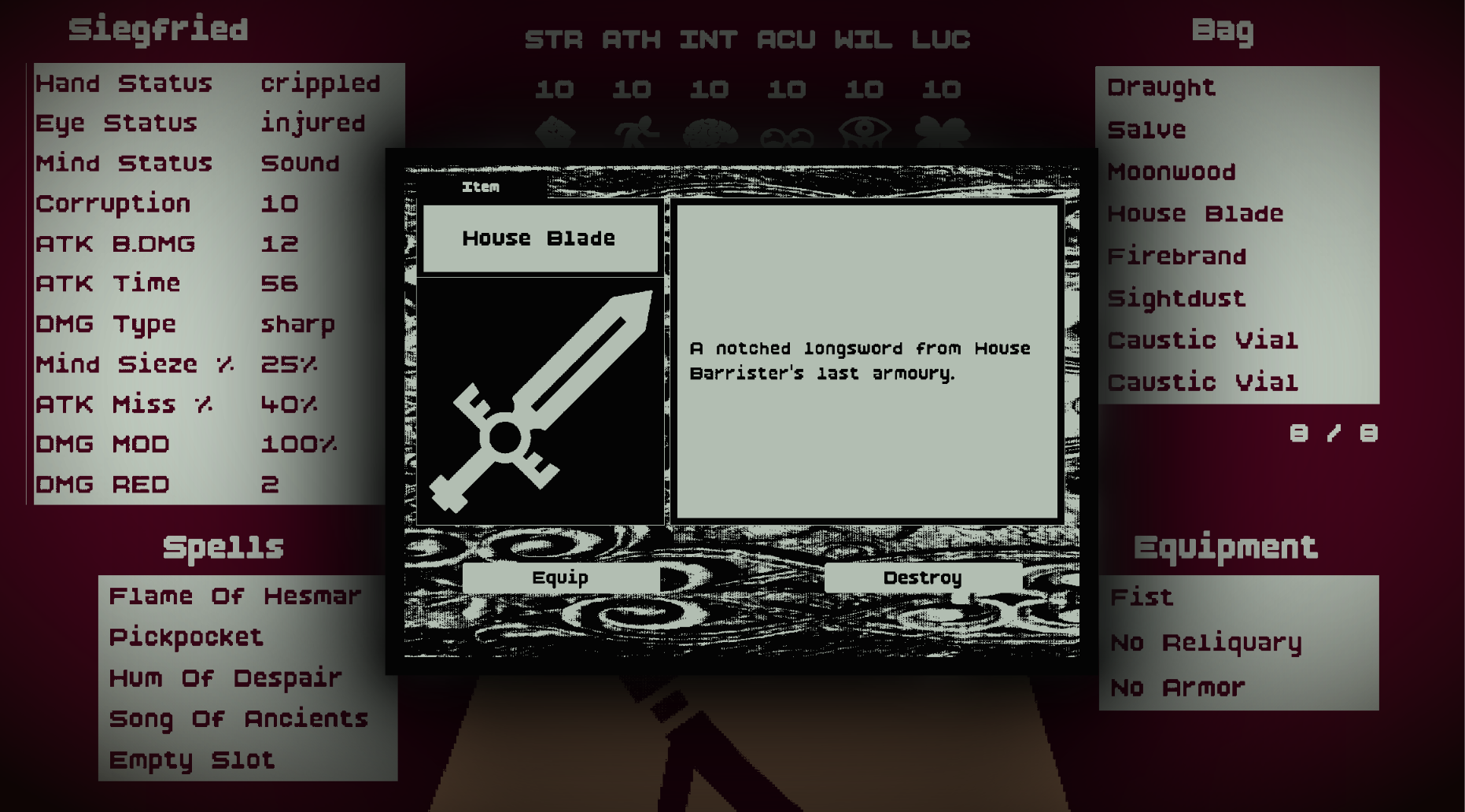
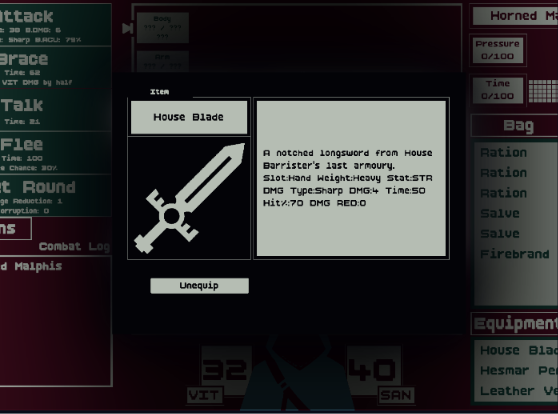
Iterations of the Item Card Menu
Stats and Numbers Calculations
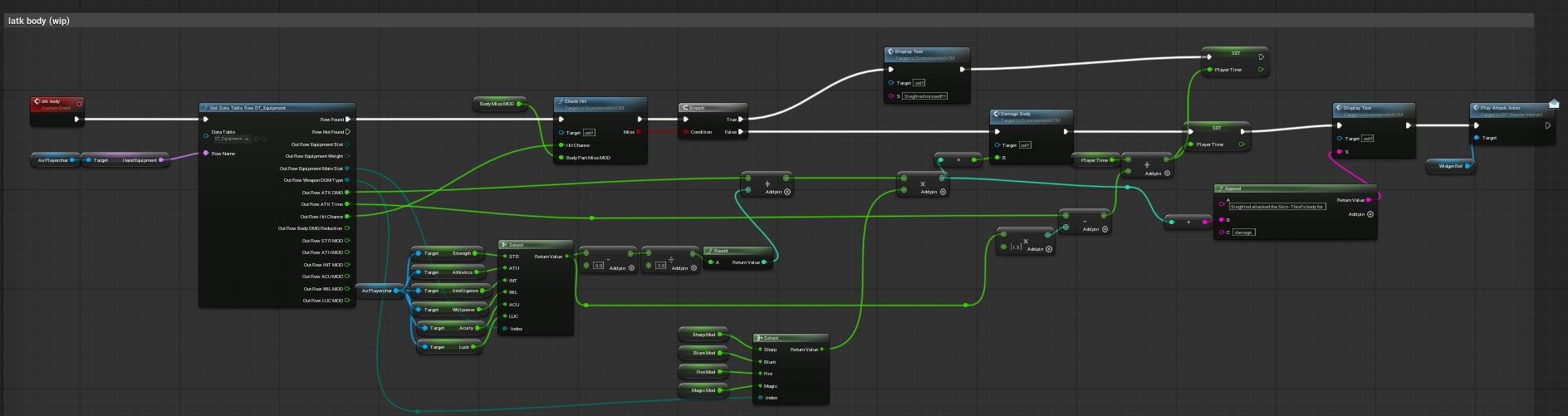
At first I took a lot of inspiration from different JRPGs with their convoluted mathematical equations for calculating damage numbers and combat math, however this became too hard to scale as a solo developer and having to keep track of different excel sheets became a hassle. The numbers then shifted more towards a tabletop approach with simpler math equations used to calculate combat math, often scaling with the player weapon’s primary stat. This also made the math accessible to the player, with quicker lookups and references to base damage numbers and damage mods.
Random Events
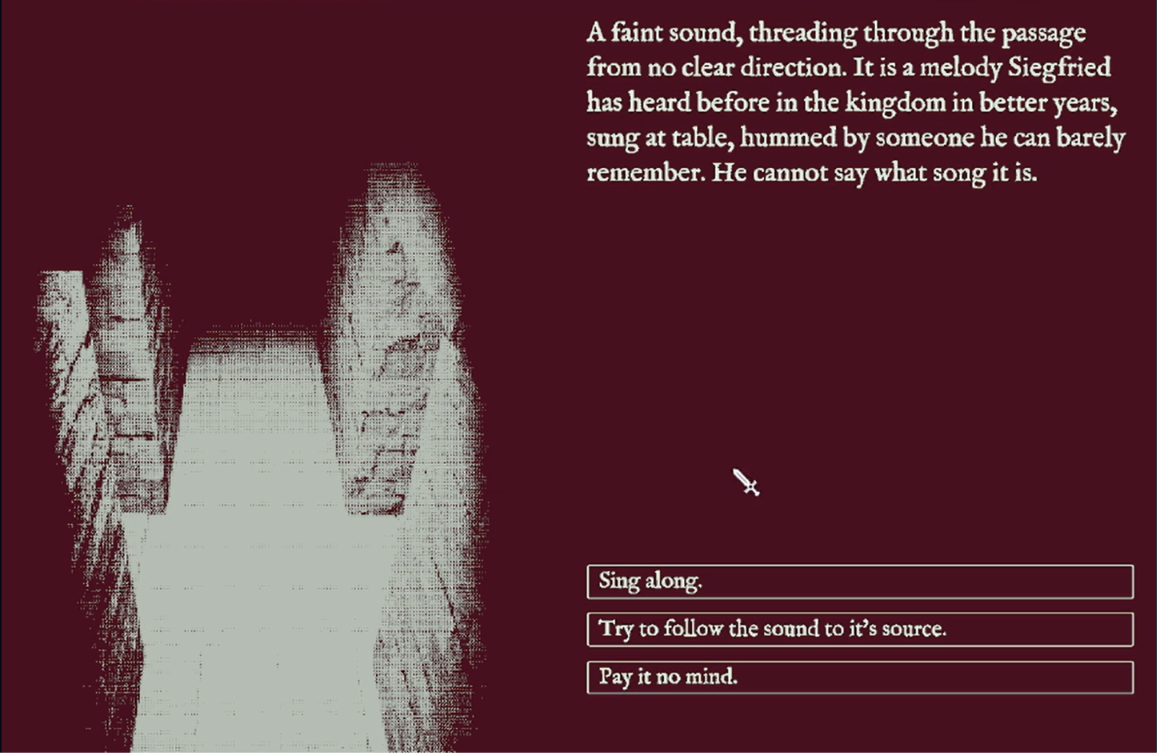
Something I wanted to try and work with was the random encounter system Implemented in the game. Roguelite games thrive on randomness and uncertainty and trying to make every run feel unique and fresh. The random events system was a method to try and encourage variability within runs. For the demo the player is presented with 5 different events that occur throughout the dungeon being selected from a wider pool of 10 total available events.
Each event details a different scenario that the player finds themselves in, and presented with a few choices on how they react to the situation. Each choice will present the player with a different outcome depending on their relevant stats and whether or not they passed the stat check. The stat check was kept simple and uses a dice roll similar to tabletop roleplaying games, two 6-sided dice are rolled and if the total number is equal to or less than the player’s stat it is considered a success otherwise a failure. Of course, since this is a computer game the dice are instead a random float variable between 1-12. It’s mathematically impossible to roll a 1 using two dice, however this allows for a greater chance of success as the events aren’t meant to be too punishing.
Rogue Lite Loop
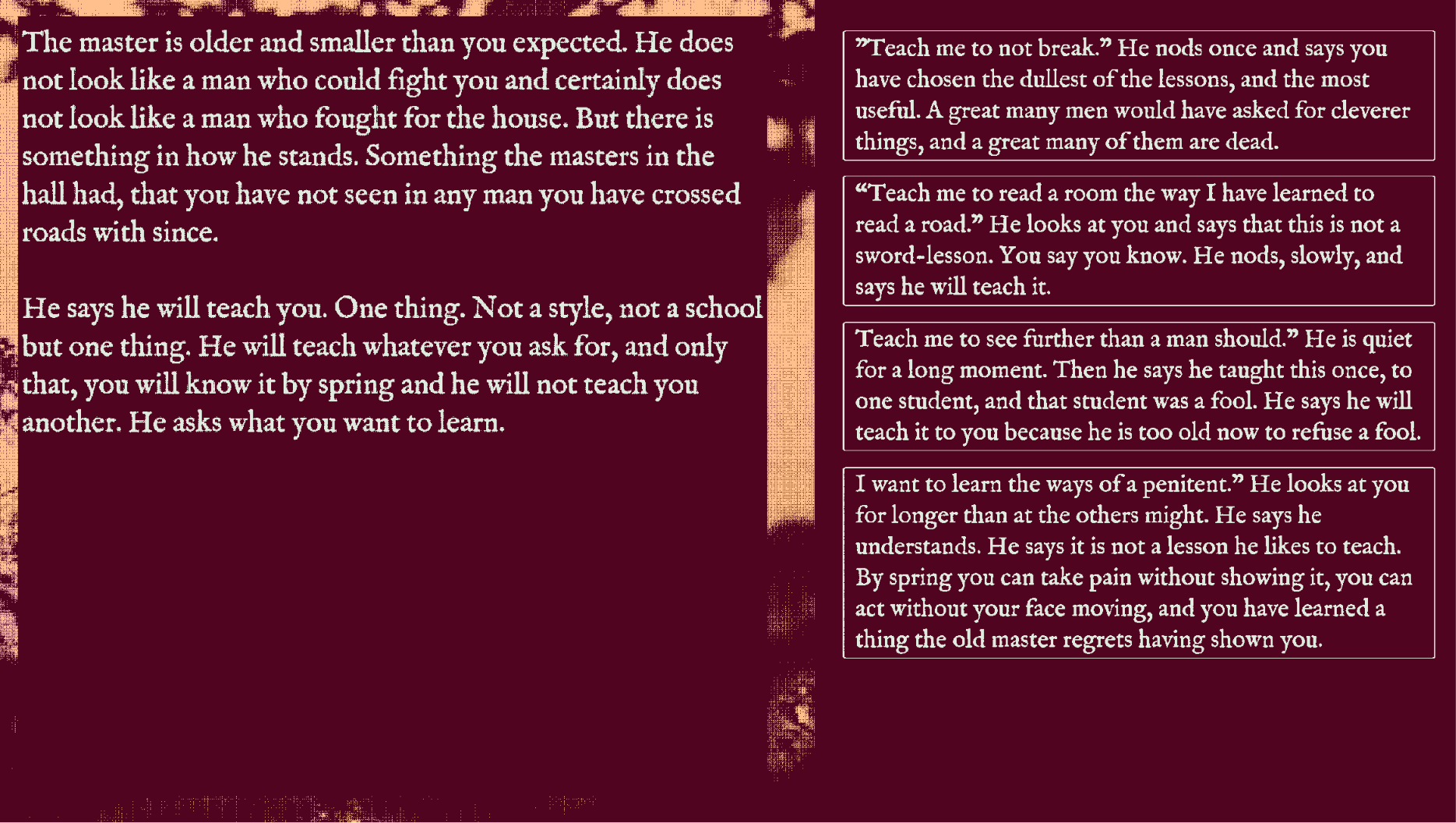
Being a roguelite means the player is constantly having to reset and start again, which allows for them to try out various builds. Upon starting the game the player is presented with an array of reactions to different scenarios the character finds themselves in prior to the events in the game. These are kept ambiguous on purpose and each choice decides the player’s starting build, stats, items, spells and max health or sanity.
Each chest in the game awards the player a random item or equipment in the game, meaning that the items a player will pick up through each run through is randomized to keep each run feeling fresh and unique. This leads to a multitude of different builds and scenarios for the player, and adapting to the different resources they have access to is part of the game’s core loop. This also applies to the spells a player will learn. There are currently three points through the game where a player is presented with an opportunity to learn spells, with each point giving the player a random spell from the available spells in the game.
Visual and Audio Design
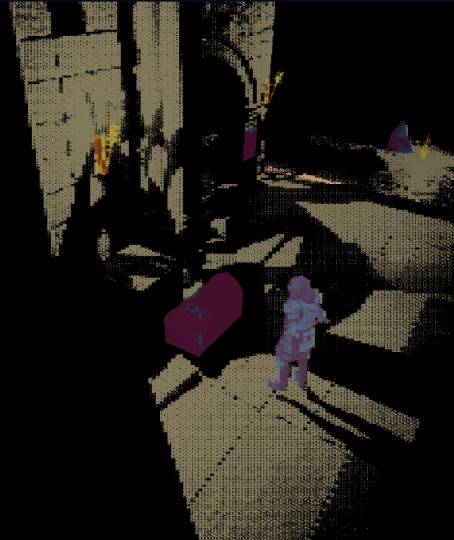
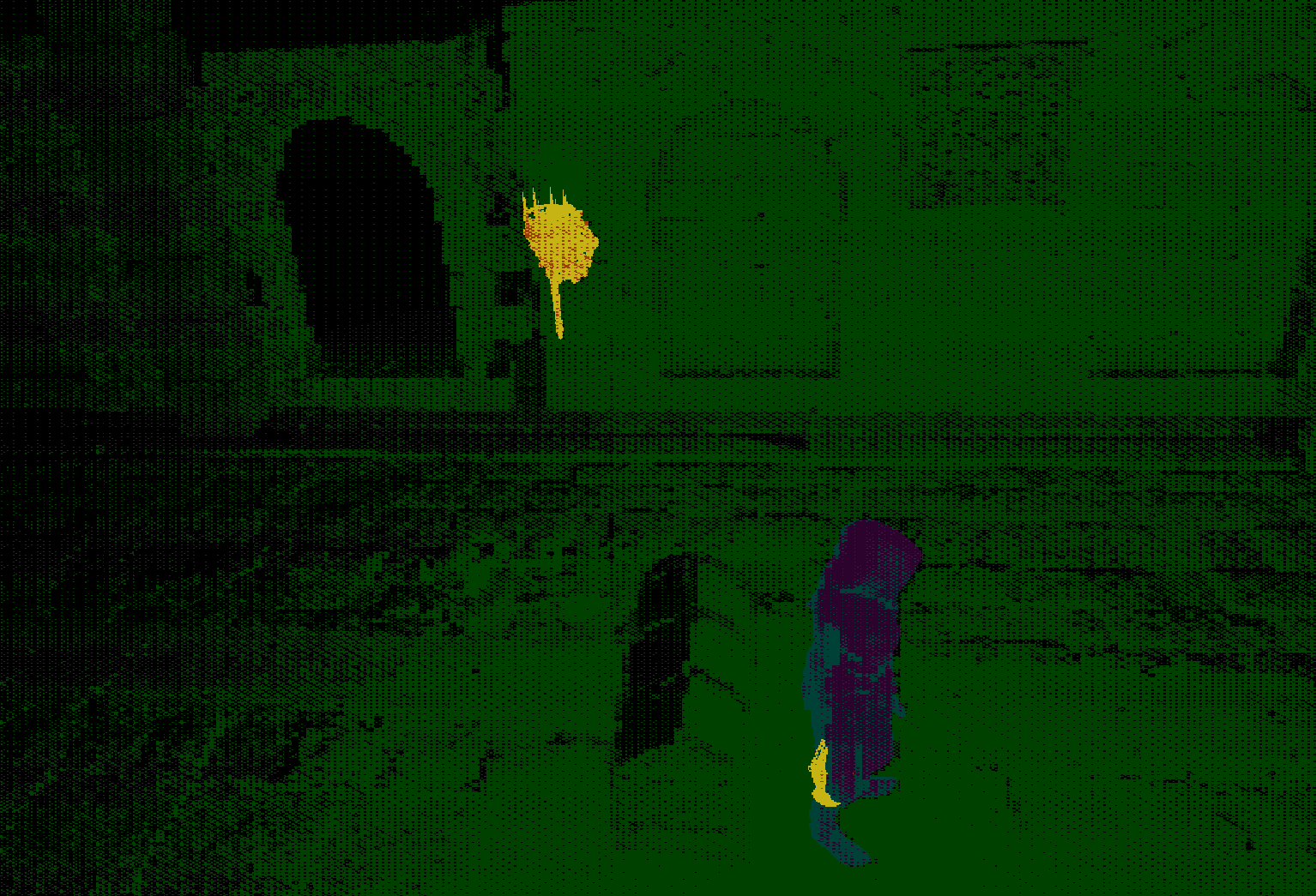
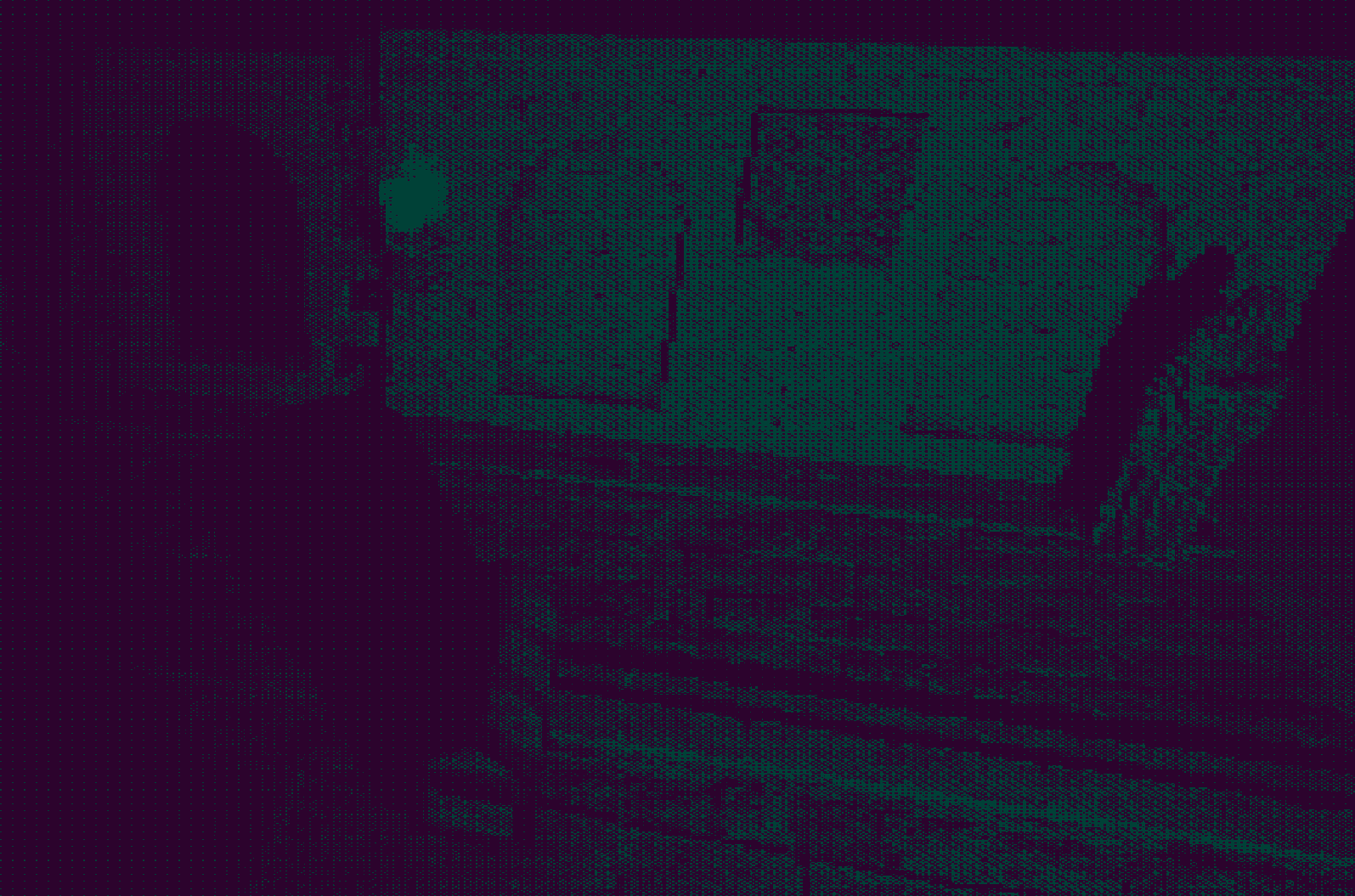
The visual design of the game was particularly fun to work on, and takes inspiration from retro games as well as Return of the Obra Dinn. The game uses heavy pixelation and dithering, as well as utilizing a 1-bit color palette per object to really emulate old retro graphics. It also gives the game a very unique visual aesthetic in the modern game space. The 1-bit color palette is applied to objects and actors depending on what their intended purpose is in the game, interactables being blue, waypoints being beige, hostels being red etc.
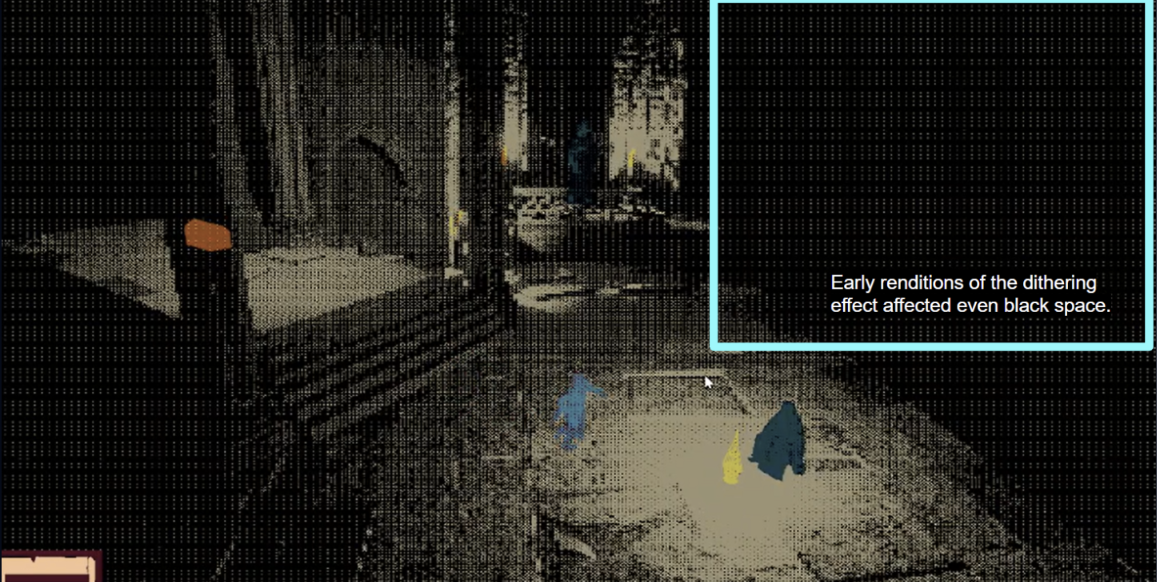
One major change during development was how the dithering worked. Originally the dithering was applied to the entire screen, even to the black non playable spaces. This was later changed so that dithering only applied to objects that were in the game, and black screen space remained black and undithered as to not have it seem like the player is looking through a screen.
Audio design in the game was also particularly fun to work on, especially how stark the difference was between overworld background music and combat music. The background music is very ambient orientated, often combining music with dark dungeon sounds such as footsteps, drums, clanging or chains scraping across the ground. The music will suddenly shift during combat to breakcore, more electronically produced fast BPM music. Trying to find and properly use breakcore songs that still held the identity of the game and specific enemy was a fun challenge and really adds to the combat encounters.
Battle Music - Hesmar
Battle Music 3
BGM - Synth
BGM - Forge
BGM - Cronophobia
Color Experimentation
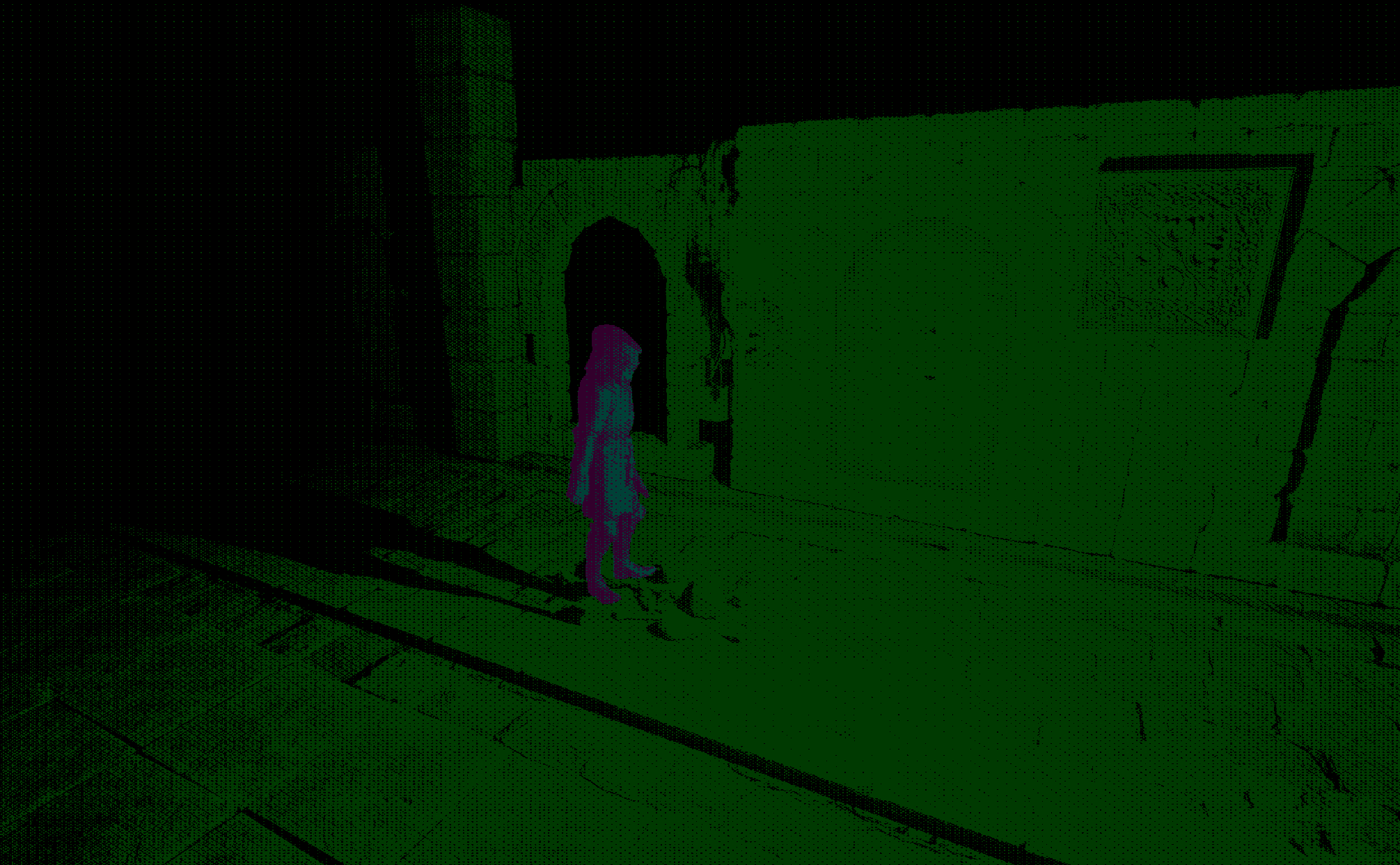
Dither Only
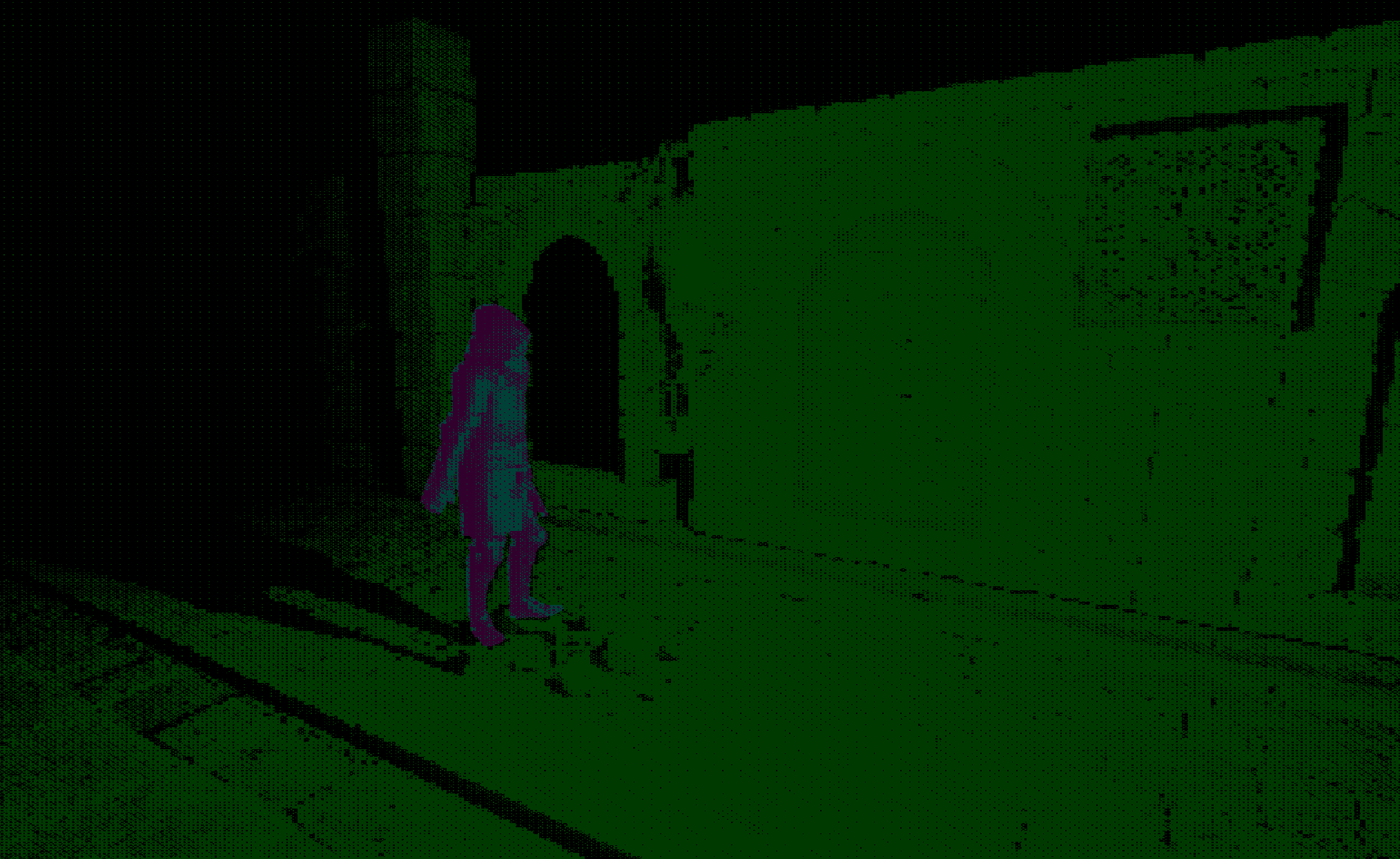
Dither+Pixel @ 256
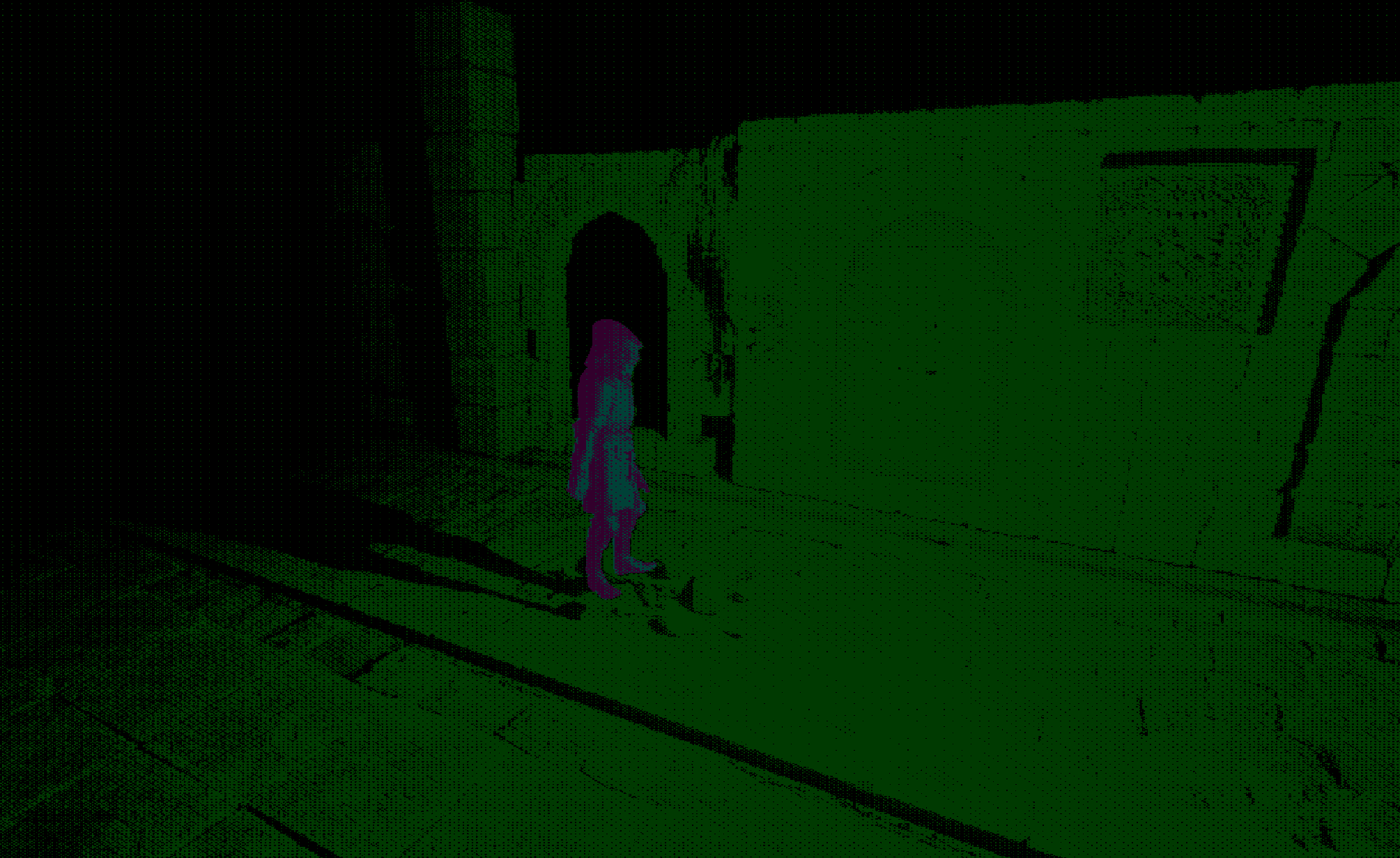
Dither+Pixel @ 512
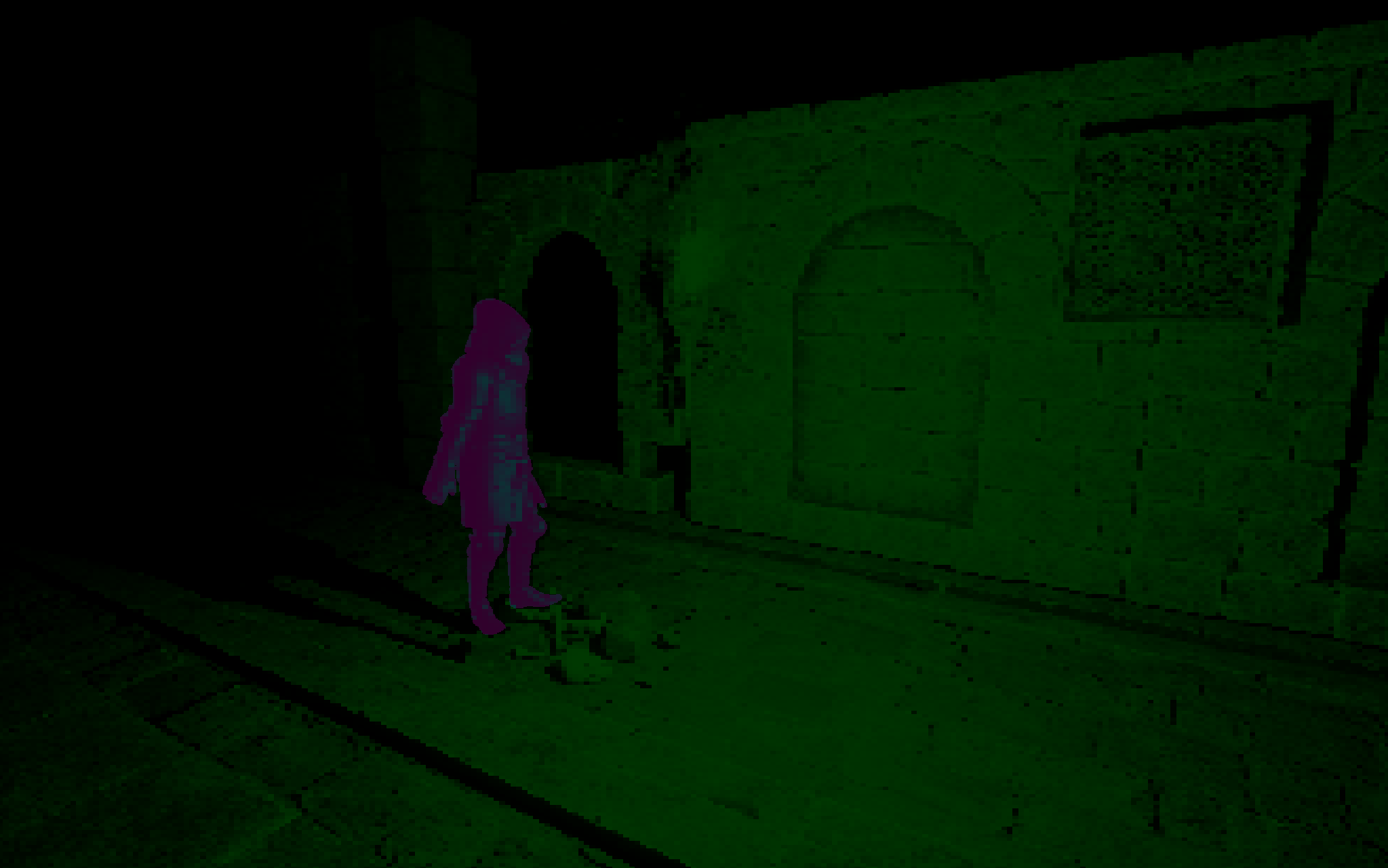
Pixel only @ 512
Design Document
What’s Next?
It’s possible that I could turn this project into a more complete release, however this project was never designed to be released as a full game and only ever designed as a demo for a fictionalized full game. The reason for not continuing to bring this project to life is simple: there are too many glaring problems in the design to be fully realized as a full game. The design choices made work because they were designed for a short 10-15 minute demo and not for a multi-hour experience.
That’s not to say that I won’t transition this project sideways into something else, I absolutely plan to. I’ve fallen in love with the world and narrative of this universe, and there are definitely stories in this fictional universe I want to tell through the eyes of Siegfried. The greater world of Eidhar has many interesting and dark stories to tell, and I feel that perhaps those stories would be better suited to a different genre of game. I plan to continue playing with the concept, the visual identity and tone of the game to bring the story alive.